What Is the Best Aluminum Composite Panel from China?
Choosing the best Aluminum Composite Panel from China requires more than comparing prices or polished product photos. It demands practical judgment, verified documentation, and attention to the building’s actual conditions. A panel beside a busy coastal road faces salt, moisture, sunlight, and wind. A high-rise project also needs dependable fire performance, dimensional stability, and installation support.
Materials-selection expert Michael F. Ashby offers a useful principle: “The best material is the one that meets the design requirements.” This idea applies directly to Aluminum Composite Panel selection. The right product may include a fire-retardant or non-combustible core, a durable PVDF or FEVE coating, and controlled aluminum thickness. However, product names can be confusing. “Premium” does not always mean suitable. Ask for current test reports, coating specifications, batch records, and clear factory identification. Independent verification matters.
China has many capable manufacturers, but quality varies between suppliers and even production batches. Experienced buyers should inspect samples, compare coating gloss, check flatness, and review packaging details. A panel that arrives scratched or poorly protected can create costly delays. Supplier communication also reveals much. Slow answers are not automatically disqualifying, but vague answers deserve caution.
This evaluation is not perfectly simple. A lower-cost panel may perform well in a sheltered interior application. A more expensive panel may be unnecessary there. Conversely, saving on the core or coating can become a serious mistake outdoors. The best Aluminum Composite Panel from China is therefore not one universal product. It is the panel with credible evidence, suitable construction, consistent manufacturing, and support that remains reliable after delivery.
Aluminum Composite Panel Basics and Core Construction
What Is the Best Aluminum Composite Panel from China?
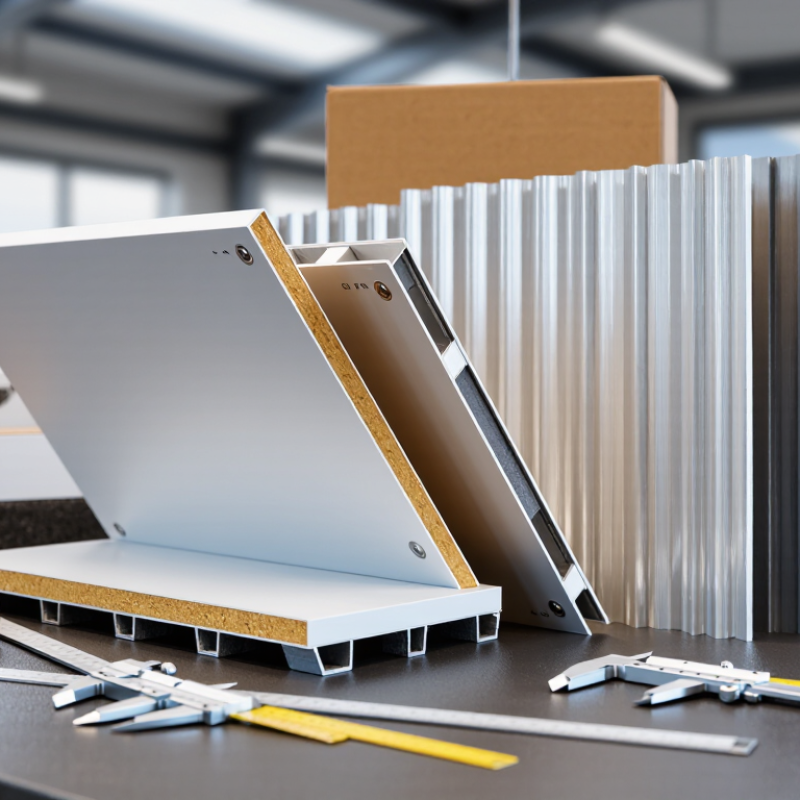
Aluminum composite panels combine two thin aluminum skins with a central core. The skins provide stiffness, weather resistance, and a clean finished surface. The core supports the panel while reducing weight. Common cores include polyethylene and mineral-filled compounds. Their behavior differs sharply during fire exposure. A mineral-filled core usually offers stronger fire performance, but it may increase weight and cost.
During site inspections, I check the panel edge before reviewing its color. A straight cut should reveal bonded layers without gaps, powder, or loose material. Uneven bonding can cause bubbling after heat cycles. Panel thickness, aluminum skin thickness, coating type, and core density also deserve careful measurement. These details affect bending, screw holding, impact resistance, and long-term flatness. Small errors become visible on large façades.
The best panel depends on the building’s risks and installation method. Exterior walls need reliable coating adhesion and resistance to sunlight, rain, and temperature changes. High-rise projects require tested fire performance and documented production controls. Ask for test reports, technical data, sample panels, and batch traceability. Check whether the stated thickness matches the delivered material. It sounds basic. It matters.
I have learned that my first preference is not always correct. A lighter panel may simplify handling but reduce rigidity. A thicker panel may perform better yet demand stronger framing. Review the core, skins, coating, and certificates together. One attractive sample cannot prove consistent factory quality.
Leading Chinese ACP Types for Different Building Applications
What Is the Best Aluminum Composite Panel from China?
China produces several aluminum composite panel types, and the best choice depends on the building application. Standard polyethylene-core panels suit interior walls, shopfitting, and covered balconies where fire exposure is limited. They are lightweight, easy to route, and often economical. However, they should not be treated as universal façade materials. That assumption deserves review.
For external façades, mineral-filled fire-retardant panels provide a safer specification route. Their core composition can support better fire performance when tested under standards such as EN 13501-1 or ASTM E84. A 2024 analysis by Grand View Research estimated the global aluminum composite panel market at about USD 6.1 billion in 2023, with projected growth through 2030. This expansion reflects demand for lightweight, energy-conscious façades, not permission to reduce testing. Project specifications still require verified certificates, core descriptions, and batch traceability.
For high-rise buildings, hospitals, transport terminals, and humid coastal projects, consider fire-retardant or non-combustible mineral-core panels. Aluminum honeycomb panels fit large soffits, ceilings, and stiff façade zones because their structure improves rigidity without excessive weight. PVDF-coated surfaces generally support stronger outdoor durability than basic polyester coatings, especially under intense sunlight. Inspect coating thickness, flatness, peel strength, and color consistency before installation. The data sheet is not enough. Request independent test reports and sample panels from production batches. In practice, even excellent panels can fail through weak joints, unsuitable sealants, or poor substrate alignment. That part is often overlooked.
How to Compare Manufacturers, Certifications, and Product Quality
What Is the Best Aluminum Composite Panel from China?
The best aluminum composite panel depends on your project, climate, and installation method. A reliable comparison starts with the manufacturer, not the brochure. Check factory experience, production equipment, quality control records, and export history. Ask whether the factory tests coating thickness, panel flatness, peel strength, and core composition. Request recent batch samples, not only showroom pieces. Small surface flaws can reveal weak process control.
Certifications also need careful checking. ISO 9001 shows a quality management system, but it does not guarantee every panel is excellent. Fire performance reports should match the exact panel structure, core, thickness, and target market. Confirm the testing laboratory, report date, and product identification. EN or ASTM references may be useful, but copied certificates are a warning sign. Product quality can vary between batches. That detail is easy to overlook.
Tips: Compare three suppliers using the same checklist. Measure sample thickness with a gauge. Bend a small cut piece carefully and inspect the bond line. Ask for color consistency data and warranty terms in writing. A factory video helps, but an independent inspection is stronger. No checklist is perfect. Good judgment still matters. You may also find that the cheapest quotation becomes expensive after cutting waste, replacement panels, or delayed delivery.
A Practical Guide to Selecting the Best Chinese Aluminum Composite Panel
What Is the Best Aluminum Composite Panel from China?
A Practical Guide to Selecting the Best Chinese Aluminum Composite Panel
Choosing the best aluminum composite panel starts with the building’s real conditions. Exterior walls, shop interiors, and signboards need different panel structures. I have found that panel thickness alone can mislead buyers. Ask about the aluminum skin thickness, core composition, coating system, and surface flatness. A thicker panel may still perform poorly if its skins are too thin. Confirm the required fire classification for your destination and project type.
Request a physical sample before approving production. Inspect the color under daylight, coating consistency, edge bonding, and protective film adhesion. Bend a small sample carefully, without damaging it. Samples reveal defects. Do not rely only on photographs. Request current test reports from independent laboratories, covering fire performance, coating durability, and bonding strength. Check whether the reports match the exact panel structure, not a similar product.
Supplier evaluation also requires practical evidence. Ask for batch records, quality inspection procedures, packing photos, and a clear replacement policy. A factory audit can reveal storage problems, mixed materials, or weak moisture protection. Confirm export packaging, container loading methods, and labeling details. I once focused too heavily on a low quotation and underestimated inland transport costs. That mistake changed the final budget. Price matters, but so do stable specifications and responsive technical support. Even experienced buyers should recheck assumptions before signing.