Top Aluminium Doors Manufacturers in China for Buyers?
China is a major sourcing base for aluminium doors, supported by deep manufacturing capacity, established glazing supply chains, and strong construction demand. The National Bureau of Statistics of China reported construction-industry value added of approximately RMB 8.56 trillion in 2023. That scale matters. It supports automated cutting, powder coating, thermal-break assembly, and custom fabrication under one supply network.
Global market studies also show continued demand for aluminium-framed openings. Grand View Research identifies energy efficiency, slim profiles, and durable materials as important growth factors in the global doors and windows market. Mordor Intelligence similarly highlights renovation, urban development, and commercial construction as major demand drivers. These reports describe broad market categories, not every aluminium doors factory. That limitation deserves attention.
A reliable buyer should look beyond attractive catalog photographs. Check alloy grades, wall thickness, thermal-break design, glazing compatibility, coating standards, air and water performance, and documented quality controls. Ask for factory audit evidence, project references, test reports, and sample corners that reveal joint accuracy. Small details matter. A poorly sealed corner can undermine an expensive entrance system.
This guide evaluates leading Chinese manufacturers through practical buyer criteria, including product range, export experience, customization capability, certifications, production equipment, and after-sales support. Rankings can never fit every project. A residential developer may value price and delivery speed, while a hotel project may prioritize acoustic performance and hardware reliability. Buyers should verify current certifications and specifications directly, because supplier capabilities can change. That is where careful judgment begins.
What to Know About China’s Aluminium Door Manufacturing Industry
Top Aluminium Doors Manufacturers in China for Buyers?
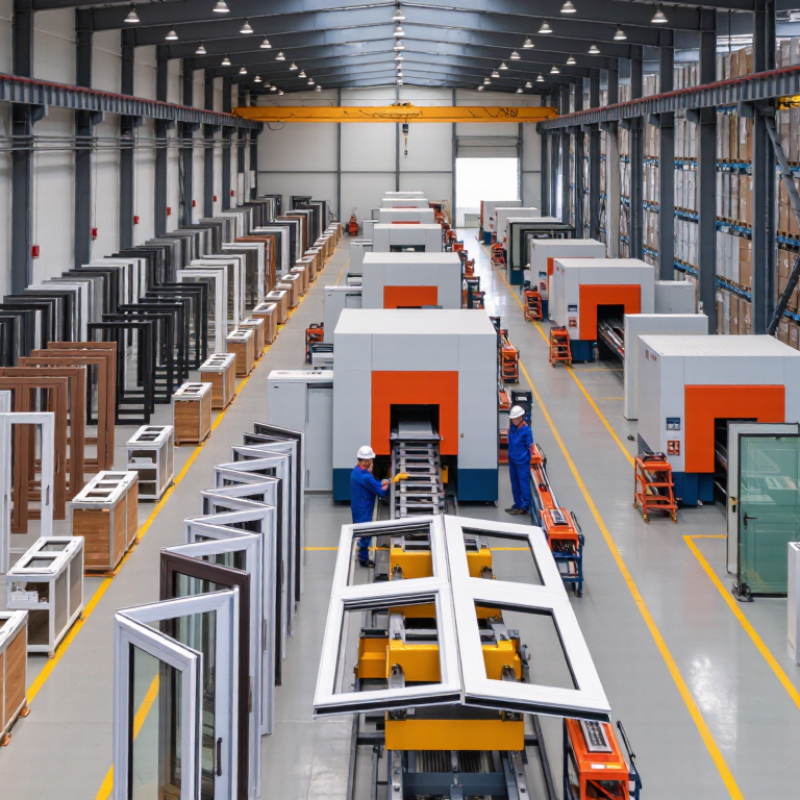
China’s aluminium door industry serves residential, commercial, and large construction projects worldwide. Its strength comes from integrated production, competitive pricing, and flexible customization. Manufacturers commonly handle extrusion, cutting, welding, powder coating, glass installation, and export packaging. This reduces communication gaps between separate suppliers. However, factory capability differs greatly. A polished showroom can hide weak process control. Buyers should examine production records, testing reports, and recent project references before placing an order.
Technical drawings should show alloy grade, wall thickness, frame dimensions, glass structure, and hardware details. Ask whether the system uses thermal breaks for energy efficiency. Coastal projects may need stronger coating protection and corrosion testing. Sample doors should be opened repeatedly, not viewed only under showroom lighting.
Small issues matter.
Uneven gaps, rough corners, or loose handles may become expensive site problems. Specifications can still miss practical details, especially drainage and installation tolerances.
Production quality depends on equipment and inspection discipline. Look for extrusion checks, coating thickness records, glass inspection, and final assembly testing. Color consistency deserves attention across different production batches. Packaging should protect corners, handles, and finished surfaces during long transport. Lead times vary with custom profiles, glass availability, holidays, and port schedules. Clear drawings and written approvals reduce mistakes. No factory gets every detail right. Buyers should keep a realistic buffer for revisions, rework, and installation adjustments.
How to Identify Reliable Aluminium Door Manufacturers in China
Reliable aluminium door manufacturers in China should prove performance, not merely display polished factory photos. The USGS Mineral Commodity Summaries 2024 reports that China produced about 41 million metric tons of primary aluminium in 2023. Scale is impressive, but it does not guarantee accurate fabrication or dependable installation.
Request the manufacturer’s business licence, factory address, export history, and recent project references. Check whether the company controls extrusion, powder coating, thermal-break assembly, and final inspection. Ask for test reports covering air permeability, water tightness, and wind resistance under EN 12207, EN 12208, and EN 12210. Reports should identify the tested door system, glass specification, laboratory, and test date. Generic certificates are weak evidence. The ISO Survey of Certifications 2022 shows China has the world’s largest base of ISO 9001 certificates, yet certification alone cannot confirm daily production quality.
I once treated a low quotation as efficient sourcing. It was not. Thin profiles caused visible flexing, and replacement hardware delayed the project. A better audit checks random profiles with calipers, photographs serial labels, and reviews coating thickness records. Request a sample corner, not only a complete showroom door. Confirm packaging details, spare-hardware availability, moisture protection, and written tolerance limits. Independent pre-shipment inspection is valuable, although it can still miss problems hidden inside sealed frames. Ask difficult questions early. Reliable suppliers usually answer with measurements, controlled documents, and test evidence rather than confident promises.
Key Product Types and Customization Options for Buyers
Top Aluminium Doors Manufacturers in China for Buyers?
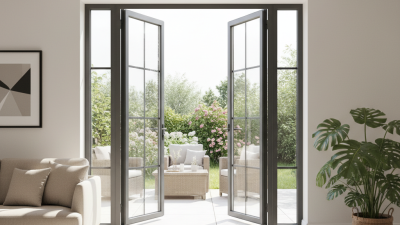
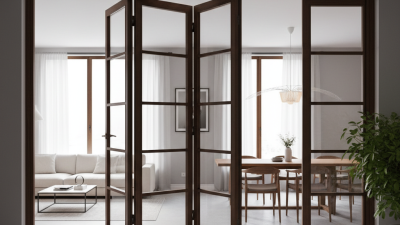
For buyers comparing aluminium door manufacturers in China, product type should come before price. Sliding doors suit wide balconies and patios, while hinged doors provide stronger sealing around compact entrances. Folding systems can open an entire wall, but their rollers need careful alignment. The International Aluminium Institute reports that buildings consume about 26% of global aluminium demand. That figure reflects aluminium’s durability, low maintenance, and design flexibility.
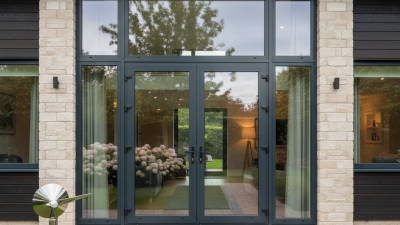
Customization is where quotations become meaningful. Buyers can request thermal-break profiles, double or triple glazing, concealed drainage, multi-point locks, and powder-coated or anodized finishes. A matte charcoal frame feels modern, while a wood-grain finish softens a residential façade. Door height, panel weight, opening direction, and threshold design must match the building structure. Ask manufacturers for U-value, air-tightness, water-tightness, and wind-load test results. Do not accept attractive photographs as technical proof.
Standards matter.
China’s GB/T 8478 requirements and project-specific building codes should guide specifications. Independent inspection can verify dimensions, glass thickness, coating adhesion, and hardware operation before shipment. Industry reports from Grand View Research also identify energy efficiency and renovation demand as major growth factors in aluminium doors. However, customization can create hidden risks. Oversized glass may increase deflection, and complex hardware may complicate future repairs. I have seen low-cost designs fail because drainage was treated as an afterthought. A detailed shop drawing, sample corner, and written tolerance schedule are therefore more valuable than a polished catalogue.
Quality Standards, Certifications, and Factory Evaluation
Top Aluminium Doors Manufacturers in China for Buyers?
Quality begins with measurable performance, not polished showroom photos. The 2023 ISO Survey recorded 1,265,216 ISO 9001 certificates worldwide. Still, certification alone does not prove reliable doors. Ask for the factory’s current certificate, scope, audit date, and corrective-action records. Confirm that the scope covers aluminium doors, not only trading activities.
A serious factory should provide alloy grade and temper records, usually for 6063 profiles. Request independent tests for air permeability, watertightness, and wind resistance under EN 12207, EN 12208, and EN 12210. For Chinese projects, check relevant GB/T 8478 requirements. Test reports should come from laboratories accredited to ISO/IEC 17025. Inspect the production line yourself, if possible. Check profile corners, gasket compression, drainage holes, hardware alignment, and coating consistency. Small defects become expensive after installation.
Environmental data also deserves attention. The International Aluminium Institute reports that recycled aluminium uses about 5% of the energy required for primary aluminium production. Ask for recycled-content evidence and batch traceability. A factory may claim sustainability without controlling material sources. That is a warning sign. Review incoming inspection records, process-control charts, and final sampling plans. One overlooked detail is packaging: unprotected corners can arrive damaged, even when the door passed laboratory testing. Factory evaluation is never perfect. A second-party inspection remains sensible before shipment.
Pricing, Ordering, and Export Considerations for International Buyers
When international buyers compare aluminium door manufacturers in China, price should never stand alone. A factory quote may exclude glass, powder coating, packaging, tooling, or inland delivery. Ask for a complete pro forma invoice with unit prices, minimum order quantity, sample charges, and payment milestones. Request technical drawings before approval. They should show profile thickness, thermal-break structure, glass specification, hardware, dimensions, and opening direction. A lower price can hide thinner profiles or weaker hardware. It happens.
Use a small trial order when possible. Confirm color samples under daylight, not only in a digital catalogue. Clarify production lead time, inspection access, replacement policy, and spare hardware. Buyers should also check whether the supplier has stable export experience, documented quality procedures, and staff who communicate clearly in technical English. These details reflect practical reliability more than polished marketing.
For export, confirm the exact Incoterm and destination responsibilities. CIF may not include import duty, local unloading, or customs fees. Wooden crates and corner protection matter because scratched frames are expensive to repair. Ask for packing photos, carton labels, commercial invoices, packing lists, certificates of origin, and destination-specific documents. Verify wind-load, energy, safety, and labeling requirements with a local professional. Standards vary. Delivery estimates can slip during holidays or material shortages, so a realistic buffer is wiser than a perfect promise. Recheck every measurement; one incorrect opening size can delay an entire container.