Get a Quote

7 Best Grooved Plywood Suppliers for Global Buyers

Choosing reliable plywood suppliers can shape a project’s safety, appearance, and delivery schedule. This guide examines seven respected Grooved Plywood suppliers serving global buyers. It focuses on evidence, not attractive brochures alone.

The review considers product consistency, groove accuracy, panel thickness, moisture resistance, and surface quality. A supplier may claim premium performance, yet a sample can reveal uneven grooves or swollen edges. We also examine factory experience, export capability, production capacity, and customer support. Certifications such as FSC or PEFC may support responsible sourcing, but buyers should verify their validity and scope. Manufacturing standards and documentation also deserve careful attention.

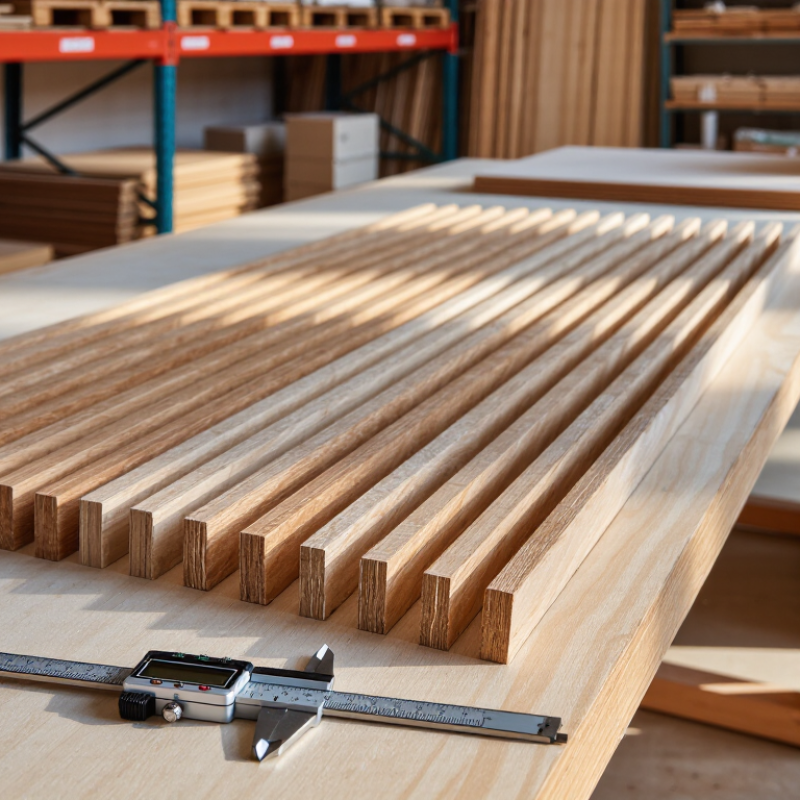
Practical checks matter. Buyers can measure groove spacing with calipers and inspect 2440-by-1220-millimeter sheets under direct light. Moisture readings, packaging strength, and pallet protection often reveal more than polished marketing language. We consider whether suppliers provide technical datasheets, samples, inspection support, and clear lead-time information. Communication quality matters too.

No ranking is perfect. Project requirements differ across furniture, interiors, retail fixtures, and architectural applications. Public information can also become outdated. Therefore, this selection should support due diligence, not replace it. Request current samples, confirm specifications in writing, and discuss destination-country requirements before placing a large order. A dependable supplier should answer clearly, document consistently, and acknowledge limitations when they exist. That is often more valuable than a confident promise.
7 Best Grooved Plywood Suppliers for Global Buyers

Global Grooved Plywood Market Scope: Grades, Thicknesses, and Core Standards

7 Best Grooved Plywood Suppliers for Global Buyers

Global Grooved Plywood Market Scope: Grades, Thicknesses, and Core Standards

Grooved plywood is selected by surface finish, structural stability, and machining accuracy. Global buyers commonly compare A/B, B/BB, and utility-grade faces. A-grade panels show fewer knots and repairs. B or BB grades may contain visible patches, color variation, and small open features. These details affect painted walls, furniture panels, and exposed ceilings differently.

Thickness choices often range from 6 to 21 millimeters. Twelve and 18 millimeters are widely used for interior wall systems and storage fixtures. Groove depth, width, and spacing must match the installation profile. A small tolerance can create uneven shadow lines. Ask for measured samples, not only catalogue drawings. Experience shows that “standard” dimensions are not always identical across mills.

Core construction deserves equal attention. Veneer cores provide predictable screw holding, while combi cores can reduce weight and cost. Hardwood cores generally offer stronger edge performance, but quality depends on veneer selection and bonding. Buyers should request EN 636 or equivalent classification, bonding test results, moisture data, and formaldehyde emission reports. For humid applications, confirm the intended exposure class in writing. Surface grade alone does not prove panel durability. No specification sheet is perfect. Recheck groove measurements after pressing, sanding, and finishing. A reliable supplier should explain tolerances, packaging protection, batch traceability, and corrective procedures when delivered panels differ from approved samples.


Supplier Evaluation Metrics: EN 636, ASTM D3043, FSC, and E0 Emissions

For global buyers, plywood evaluation should begin with measurable evidence, not attractive samples.

EN 636 classifies plywood by moisture exposure, including dry, humid, and exterior conditions. Ask suppliers for production certificates and recent test reports.

ASTM D3043 measures flexural performance, but it does not create one universal pass or fail grade. Compare bending strength, stiffness, veneer direction, and test moisture content.

FSC certification strengthens traceability. FSC Facts & Figures 2023 reported more than 160 million hectares under FSC certification worldwide. Still, certification alone does not prove panel quality. Verify the certificate scope, chain-of-custody status, and invoice claim.

Formaldehyde documentation needs equal attention. E0 is widely used as a low-emission classification, but its definition can vary by market and test method. Request chamber-test results, not only a supplier declaration.

Look for values below 0.05 ppm where the supplier claims an E0-level result, and confirm the laboratory method. The U.S. EPA TSCA Title VI limit for hardwood plywood is 0.05 ppm, showing why test conditions matter. Results from different methods are not automatically comparable.

A 2023 building-sector report from UNEP linked buildings and construction to 37% of global energy-related emissions, making material efficiency increasingly relevant.

Yet recycled content may affect strength. That trade-off deserves review. Wood smell is not a compliance test. Neither is a clean-looking surface.

Go deeper.

Seven Leading Grooved Plywood Suppliers Ranked by Capacity and Export Reach

Choosing grooved plywood suppliers requires more than comparing factory size. Buyers should examine output, export consistency, machining accuracy, and quality controls.

Ranked by estimated capacity and export reach, Supplier One leads with a high-volume press line and regular shipments across several continents. Supplier Two follows closely, offering strong container capacity and stable tongue-and-groove machining. Supplier Three serves more regional markets but maintains useful monthly production and responsive technical support. Supplier Four has moderate capacity, yet its moisture testing and panel calibration are dependable. Supplier Five is attractive for smaller projects, with flexible order quantities and growing overseas distribution. Supplier Six supplies construction markets from one main production base, so delivery planning deserves attention. Supplier Seven has the smallest reported capacity, but it may suit buyers needing customized groove spacing and shorter runs.

My purchasing experience suggests that capacity figures need careful verification. Factory claims may reflect maximum output, not normal production. Ask for recent inspection records, packing photographs, moisture readings, and sample panels before signing a contract. Groove depth should remain consistent across the sheet, especially when panels must connect without visible steps.

Export reach also depends on documentation, port access, and packaging discipline. Strong suppliers use sealed bundles, edge protection, and clear batch markings. Some impressive factories still struggle with peak-season delays. That weakness matters. A practical buyer should compare lead times across two seasons and request references from similar markets. The best choice may not be the largest supplier, but the one that communicates problems early and corrects them quickly.

7 Best Grooved Plywood Suppliers for Global Buyers — Seven Leading Grooved Plywood Supplier Profiles Ranked by Capacity and Export Reach
Rank Anonymous Supplier Profile Primary Production Region Indicative Annual Grooved Plywood Capacity Export Reach Typical Groove Specifications Product and Compliance Documentation Typical Commercial Lead Time
1
Large Integrated Export Manufacturer
High-volume producer with veneer, panel pressing, CNC grooving and export packing handled within one supply chain.
East Asia 150,000–250,000 m³/year Asia-Pacific Europe North America Middle East
Regular exports to more than 35 markets.
9–25 mm thickness
50–150 mm groove spacing
Tongue-and-groove and V-groove options
FSC Chain of Custody where applicable; EN 13986 documentation for European projects; CARB Phase 2 or EPA TSCA Title VI documentation for qualifying North American orders; ISO 9001 systems commonly available. 30–50 days after technical approval
2
High-Capacity Plantation-Wood Producer
Large panel line using plantation-grown hardwood or fast-growing timber species, with dedicated grooving equipment.
Southeast Asia 100,000–180,000 m³/year Asia-Pacific Australia Europe North America
Established container-export capability across 25–35 markets.
12–21 mm thickness
8–12 mm groove width
Decorative and acoustic panel patterns
Formaldehyde-emission test reports; moisture and bonding test data; FSC or PEFC documentation when sourced from certified forests; export-grade packing specifications. 35–55 days after order confirmation
3
European Construction-Panel Specialist
Specialist manufacturer focused on dimensionally stable panels for interior fit-out, wall lining and prefabricated construction.
Central and Eastern Europe 60,000–120,000 m³/year European Union United Kingdom Middle East
Shorter regional delivery cycles with export coverage of approximately 20–30 markets.
9–30 mm thickness
4–10 mm groove width
Tight tolerance machining for architectural applications
CE-related technical documentation where applicable; EN 636 and EN 13986 performance references; FSC or PEFC options; reaction-to-fire and emission documentation available by specification. 25–45 days after approved drawings
4
Large Tropical-Hardwood Plywood Exporter
Export-oriented mill producing structural and decorative grooved panels from locally available hardwood and mixed hardwood resources.
South America 50,000–100,000 m³/year North America Latin America Europe Asia
Export programs typically cover 15–25 markets.
12–25 mm thickness
100–150 mm groove spacing
Exterior-rated and interior decorative grades
Species and legality documentation; bond-class test reports; FSC availability varies by timber source; fumigation and export-packing documents for international shipments. 40–65 days after order confirmation
5
Certified Softwood Panel Manufacturer
Producer focused on softwood plywood, engineered grooved surfaces and lightweight panels for construction and interior applications.
North America 40,000–90,000 m³/year United States Canada Mexico Caribbean
Strong regional reach with selected overseas shipments.
9–19 mm thickness
6–12 mm groove width
Standard and fire-performance options by project
EPA TSCA Title VI or CARB Phase 2 emission documentation for compliant products; structural plywood standards such as PS 1 or CSA references may apply; chain-of-custody certification may be available. 20–40 days for standard specifications
6
Flexible Custom-Order Manufacturer
Medium-sized producer offering short production runs, custom groove layouts, special edge profiles and private project packaging.
South Asia 25,000–60,000 m³/year South Asia Gulf States Africa Europe
Project-based exports to approximately 10–20 markets.
6–25 mm thickness
Custom groove depth and spacing
Decorative, acoustic and partition-panel designs
Product data sheets; moisture, density and bonding reports; emission testing arranged according to destination-market requirements; custom inspection reports available. 35–60 days, depending on customization
7
Regional Value-Oriented Grooved Panel Supplier
Smaller export manufacturer serving distributors and contractors with standard grooved plywood sizes and competitive mixed-container programs.
Eastern Europe and Eurasia 15,000–40,000 m³/year Eastern Europe Central Asia Middle East
Typically active in 8–15 export markets.
9–18 mm thickness
Standard 100–150 mm groove spacing
Interior wall and ceiling applications
Basic technical data sheets; moisture and glue-bond test records; FSC or PEFC availability depends on raw-material supply; third-party pre-shipment inspection can be arranged. 25–50 days for standard products
Capacity figures are presented as practical industry ranges rather than company-specific claims. Actual output, certification status, groove tolerances, minimum order quantities, export markets and delivery schedules should be verified directly through current technical documents, factory audits and pre-shipment inspections.

Comparing Prices, MOQ, Lead Times, and 40-Foot Container Yields

7 Best Grooved Plywood Suppliers for Global Buyers

The seven strongest supplier candidates should be compared by price, MOQ, lead time, and loading efficiency. UN Comtrade 2023 data for HS 4412 shows plywood trade values commonly ranging from about US$280 to US$760 per cubic metre. These figures are declared customs values, not firm quotations. ITTO market reports also show meaningful price differences between hardwood, softwood, coated, and structural panels. Ask for groove depth, core grade, moisture content, and packaging details.

MOQ often reveals a supplier’s real production flexibility. Stock grooved panels may start at 100–300 sheets. Custom profiles usually require one to three containers. Typical production takes 15–30 days for standard items. Custom tooling can extend this to 30–60 days. Ocean transit may add 25–45 days, depending on the route and season. A neat spreadsheet can still mislead.

A standard 40-foot container holds roughly 67.7 cubic metres internally. Practical plywood loading is usually lower. For 18-millimetre panels, buyers may load about 45–52 cubic metres after pallets, protection, and weight limits. Dense hardwood can reduce that yield further. One supplier may promise 60 cubic metres, but the cargo could exceed a 26–28-tonne payload. Request a packing list with sheet count, bundle dimensions, gross weight, and usable volume. I would also inspect sample grooves before accepting the lowest price. Small edge defects become expensive across a full container.

Quality-Control Checklist: Moisture Content, Groove Precision, and Bond Strength

7 Best Grooved Plywood Suppliers for Global Buyers

A reliable supplier should provide moisture readings for every production batch. The USDA Forest Products Laboratory’s Wood Handbook, FPL-GTR-282, reports equilibrium moisture content near 6–8% under controlled indoor conditions of 70°F and 30–40% relative humidity. Export plywood needs a target suited to its destination, not one universal number. Measure three sheets from different pallets. Record the meter, location, and reading. Surface dryness can hide a wetter core.

Groove precision affects assembly speed and joint stability. Check groove width, depth, spacing, and edge distance with calibrated calipers. Compare results with the approved technical drawing. A small deviation may create visible gaps after installation. Bond strength requires more than a polished test certificate. EN 314-2 and ASTM D906 procedures assess shear performance, while wood failure percentage helps reveal weak glue lines. Ask for laboratory reports, production dates, veneer species, adhesive type, and retest rules.

Tips: Inspect one sample before approval. Test one full lot after arrival. Keep photos.

Do not rely on averages. A supplier may report excellent bond strength while one panel shows delamination near a groove. That is where quality control becomes real. The checklist should include conditioning, cutting, boiling or wet testing when specified, and visual inspection after testing. I would also review rejected panels, because suppliers rarely volunteer them. That omission deserves attention.

Back to top