Locally made
Why Choose LED Garden Lighting for Global Projects?
Global landscapes demand more than attractive fixtures. They require dependable performance in coastal gardens, dry courtyards, tropical resorts, and cold public parks. LED Garden Lighting offers precise beam control, lower energy use, and long operating life. These advantages can reduce maintenance visits when projects span several regions.
Janet Lennox Moyer, a respected landscape-lighting designer and author, has expressed the guiding principle: “Light should reveal the landscape, not overpower it.” That idea matters. A softly lit stone path feels safer without becoming harsh. A narrow beam can highlight a tree trunk while protecting nearby bedrooms from glare. Warm colour temperatures can preserve a welcoming evening atmosphere.
LED systems also support practical control. Dimming, scheduling, and zone management help teams respond to different seasons and operating hours. However, LED is not automatically sustainable. Poor optics, excessive brightness, or unsuitable drivers can waste energy and disturb wildlife. This is where professional experience becomes essential.
A reliable global specification should consider humidity, salt exposure, voltage variation, drainage, and local installation practices. It should also include replaceable components and clear testing procedures. Product claims need verification through photometric data, warranty terms, and field performance.
There is no universal lighting formula. A successful project may still need adjustment after planting grows, weather changes, or visitors report discomfort. That imperfection is useful. It encourages designers to observe real sites, measure results, and refine the lighting rather than trusting a catalogue alone.
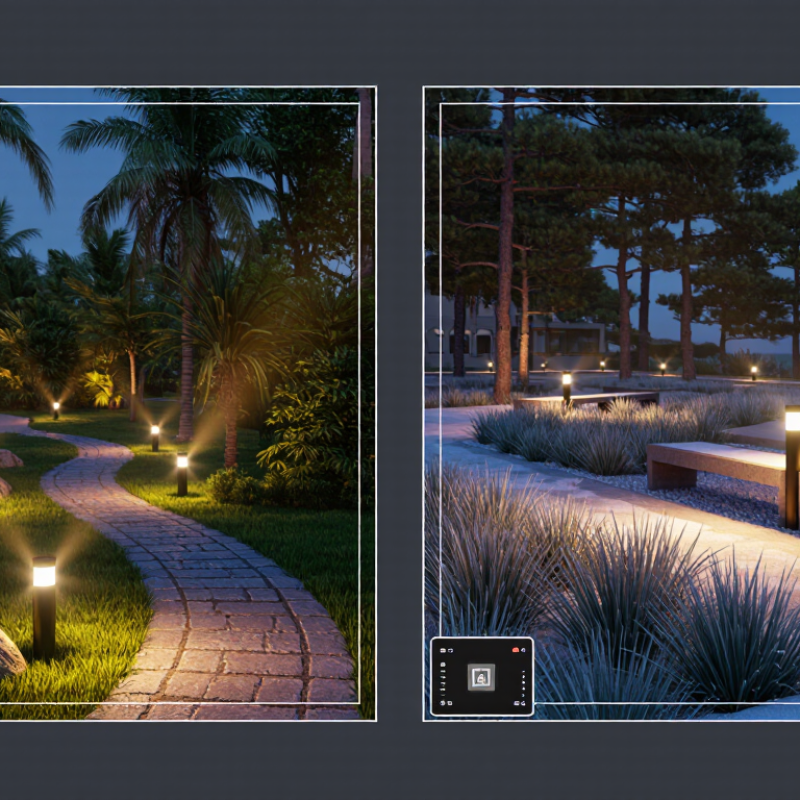
LED garden lighting uses light-emitting diodes to illuminate paths, lawns, trees, terraces, and outdoor gathering areas. A compact LED module produces light through a semiconductor, while a driver controls electrical power safely. These fixtures usually offer lower energy use, longer service life, and more precise beam control than older garden lamps. The light can be warm, neutral, or cool, depending on the landscape’s purpose.
For global projects, designers assess climate, soil conditions, maintenance access, and local electrical requirements. An IP65 rating may suit exposed fixtures, but installation details still matter. Sealed cable joints, drainage, and stable foundations help prevent early failures. Photometric planning can place soft light on a pathway without shining directly into nearby windows. That small detail affects comfort, safety, and community acceptance.
LED garden lighting is not a magic fix. Poorly aimed fittings can create glare, harsh shadows, or unwanted sky glow. Field inspections often find lights installed too close to plants, where growth later blocks the beam. I would also question overly cool color temperatures in residential gardens. They can make foliage appear pale and uncomfortable at night. Testing one small area before full installation is wiser, although project schedules do not always allow it. Even efficient LEDs need cleaning, inspection, and occasional driver replacement.

LED garden lighting uses solid-state light-emitting diodes to illuminate paths, lawns, planting areas, façades, and outdoor public spaces. LEDs can provide similar brightness with lower electricity consumption than traditional incandescent, halogen, and compact fluorescent lamps.
Estimated annual electricity use for a lamp producing approximately 800 lumens and operating 8 hours per day for 365 days. Actual consumption varies according to fixture output, controls, operating schedules, and local project requirements.
LED garden lighting combines efficient light sources, protective housings, electrical controls, and careful site planning. In a global project, each part must suit the local climate and infrastructure. Designers begin with a lighting survey. They measure paths, planting beds, trees, water features, and nearby buildings. This prevents glare and keeps light away from bedroom windows.
A typical system uses low-voltage fixtures, drivers, cables, timers, and programmable controls. The driver changes incoming electricity into a stable output for the LEDs. Photocells or astronomical timers adjust operation according to sunrise and sunset. In humid coastal areas, installers select sealed fixtures and corrosion-resistant materials. In cold regions, they check cable flexibility and battery performance. IP ratings help confirm resistance to dust and water, but ratings do not replace proper installation.
Light distribution also matters. Narrow beams can highlight trunks, while wider beams softly cover lawns and walkways. Warm color temperatures often make stone, bark, and foliage appear more natural. Engineers calculate spacing, mounting height, wattage, and voltage drop before installation. Local electricians then verify grounding and compliance with regional electrical rules. Real projects are rarely perfect. Soil movement can tilt fixtures. Plants grow and change the original lighting pattern. Maintenance teams should inspect lenses, connections, timers, and drainage during scheduled visits. A small field test can reveal problems that drawings miss. That's where experience matters.
Why Choose LED Garden Lighting for Global Projects?
Key Benefits of LED Garden Lighting
LED garden lighting offers lower energy use, long service life, and flexible installation for international landscapes. These benefits matter in parks, hotels, campuses, and residential developments with different operating budgets. Modern LED fixtures can highlight paths, trees, steps, and water features without excessive heat. They also support precise beam control, helping designers create comfortable night scenes instead of bright, flat spaces.
In practical projects, durability depends on more than the light source. Select suitable IP protection for rain, dust, and irrigation zones. Check corrosion resistance near coasts. Use warm color temperatures where people gather, and reserve cooler light for specific visibility needs. Photometric testing can reduce dark spots and glare. Local electrical requirements must guide installation and inspection. A reliable lighting plan also considers cable access, drainage, replacement time, and future control upgrades. Small details often decide long-term performance.
Tips: Keep fixtures away from direct sprinkler spray when possible. Test lighting after planting, not only before. Leave access for cleaning and repairs. Avoid over-lighting wildlife areas. No plan is perfect. Seasonal growth, wet soil, and changing public use may expose weaknesses later, so site reviews should continue after handover.
| Evaluation Dimension | LED Garden Lighting | Conventional Garden Lighting | Project Benefit |
|---|---|---|---|
| Energy efficiency | Typically uses 50–80% less electricity than halogen or incandescent alternatives for comparable illumination. | Higher energy consumption and greater heat loss. | Lower operating costs and reduced load on electrical infrastructure. |
| Service life | Quality LED luminaires commonly provide approximately 25,000–50,000 hours of rated life, depending on design and operating conditions. | Halogen lamps often require replacement after roughly 2,000–4,000 hours. | Fewer lamp replacements and less disruption across large outdoor sites. |
| Maintenance requirements | Solid-state construction eliminates routine lamp changes; cleaning and inspection are still required. | Frequent lamp replacement and spare-lamp management may be necessary. | Lower maintenance labor, access equipment, and inventory costs. |
| Lighting performance | Directional light distribution supports accurate illumination of paths, plants, façades, steps, and public areas. | Omnidirectional lamps can create more wasted light and uneven illumination. | Improved visual comfort, wayfinding, landscape presentation, and safety. |
| Control compatibility | Compatible designs can support dimming, timers, photocells, motion sensors, and centralized lighting controls. | Control options may be limited, especially with older lamp and transformer systems. | Enables adaptive lighting schedules and additional energy savings. |
| Environmental operating range | Available with weather-resistant housings and ingress protection ratings suitable for outdoor applications. | Performance and protection depend heavily on the lamp, fixture, and enclosure design. | Supports reliable deployment in gardens, parks, resorts, campuses, and streetscapes. |
| Light color options | Available in multiple correlated color temperatures, commonly from warm white around 2,700 K to neutral and cool white ranges. | Color choice is more dependent on the lamp technology and replacement availability. | Allows lighting scenes to be matched with planting, architecture, local climate, and cultural preferences. |
| Start-up behavior | Reaches full output almost instantly and performs well with frequent switching. | Some discharge lamps require warm-up time and may not restart immediately after power interruption. | Improves reliability for pathways, entrances, emergency visibility, and sensor-based operation. |
| Safety and heat | Produces less radiant heat than halogen or incandescent sources, although the LED driver and heat sink still require proper thermal design. | Higher lamp surface temperatures can increase burn and heat-related risks. | Suitable for areas near pedestrians, plants, furnishings, and sensitive landscape materials when correctly specified. |
| Global project adaptability | Can be specified with different input voltages, mounting methods, optical distributions, color temperatures, and protection levels. | Options may be less flexible and more dependent on local lamp formats and supply chains. | Simplifies adaptation to local regulations, climates, installation conditions, and design requirements. |
| Total cost of ownership | May have a higher initial purchase price, but energy savings, longer service life, and reduced maintenance can lower lifecycle costs. | Often lower initial cost, but recurring electricity and replacement expenses can be higher. | Provides a stronger long-term value proposition for large-scale and continuously operated projects. |
Note: Performance figures are typical industry ranges. Actual results depend on luminaire quality, thermal management, driver performance, ambient temperature, installation conditions, operating hours, and control strategy.
Choosing LED garden lighting begins with the site, not the fixture. The International Energy Agency reports that lighting uses about 15% of global electricity demand. Efficient LEDs can reduce energy use, but only when optics, controls, and installation match the landscape. Review local voltage, climate, soil moisture, salt exposure, and maintenance access before approving a specification. A coastal pathway needs stronger corrosion protection than a sheltered courtyard.
Ingress protection is a practical checkpoint. IEC 60529 ratings help assess resistance to dust and water, but an IP rating does not guarantee long service life. Check cable glands, connectors, drainage, and driver location together.
The U.S. Department of Energy’s Solid-State Lighting reports emphasize thermal management, controls, and measured performance. Ask for LM-79 photometric data, LM-80 lumen-maintenance evidence, and a clear warranty. These documents are more useful than impressive lumen claims.
Color quality also shapes visitor experience. A CRI above 80 may suit general planting, while heritage gardens may require better red rendering. Warm CCTs near 2700K–3000K usually feel less harsh at night. Glare still matters. Shielded optics protect dark views and reduce discomfort for pedestrians.
Dimming and astronomical controls can lower consumption further, although poorly tuned schedules create dark zones. No specification is perfect. I have seen projects overfocus on wattage and overlook replacement time. That mistake becomes expensive across distant sites, especially when spare drivers are unavailable. Fancy fittings fail too. Reliability is often quiet, repairable, and carefully documented.
LED garden lighting serves different outdoor needs across global projects. In residential courtyards, low-glare fixtures illuminate paths, steps, and planting beds without overpowering the home. In public parks, carefully spaced lights improve nighttime visibility near benches, walkways, and entrances. Hotels often use warm lighting to shape a calm arrival experience around water features and terraces.
Climate changes the design. Coastal projects need corrosion-resistant materials and sealed connections. In humid regions, drainage and waterproofing deserve close attention. Cold areas may require fixtures and cables rated for freezing temperatures. Solar-powered systems can support remote gardens, but their performance depends on seasonal sunlight and battery maintenance. Results vary more than many project plans admit.
Tips: Test light levels after sunset, not only during daytime installation. Keep glare away from windows and neighboring properties. Use layered lighting rather than excessive brightness. Confirm local electrical requirements before installation.
Experienced project teams usually combine path lights, accent lights, and discreet uplighting. This creates depth while preserving dark areas for visual comfort and wildlife. Timers, sensors, and dimming controls can reduce energy use and simplify operation. However, controls may become confusing when several zones share one schedule. A clear control plan prevents unnecessary maintenance visits. Small details matter. A hidden cable, poor drainage point, or misplaced beam can weaken an otherwise strong landscape. Regular inspections also reveal fading finishes, loose fittings, and changing plant growth before they affect safety or appearance.